
Still Struggling with Visual Symptoms After a Head Injury?
Connect with licensed vision therapy professionals in Metro Vancouver.
What is Vision Therapy?
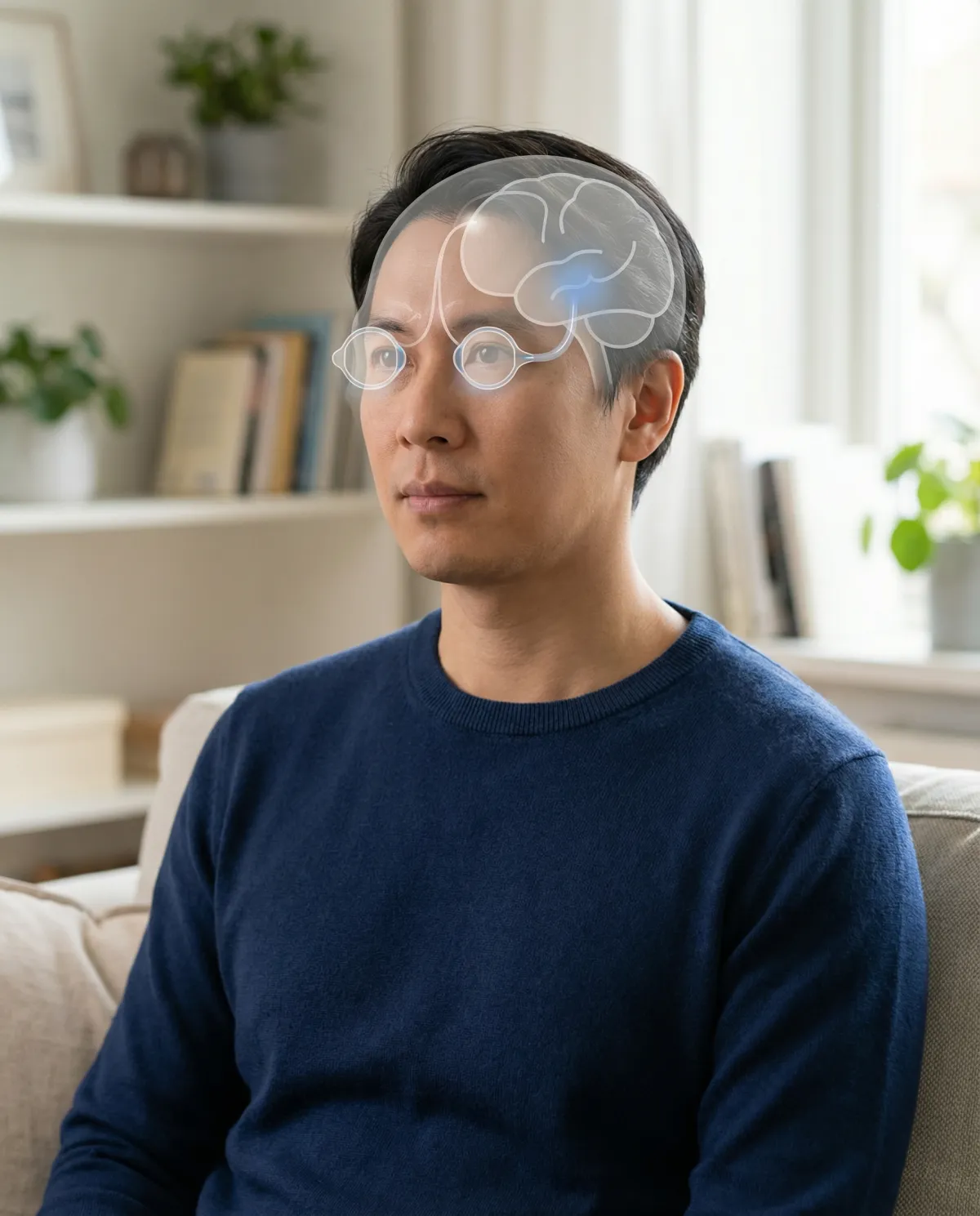
Vision therapy is like physical therapy for your visual system. It's specialized care provided by licensed optometrists who focus on how your eyes and brain work together.
After head injuries or concussions, many people experience ongoing visual symptoms even when standard eye exams come back "normal." That's because eye exams test eye health and clarity—not how well your eyes coordinate and process information together.
Vision therapy addresses these coordination issues through structured exercises tailored to your specific needs. Each program is delivered by licensed optometrists and designed to help your visual system function more effectively.
What Can Vision Therapy Help With?
Vision therapy addresses functional vision issues that often persist after head injuries, concussions, or prolonged visual stress.
Post-Concussion & Head Injury Symptoms
Blurry or double vision
Sensitivity to light
Difficulty with balance
Visual fatigue
Problems tracking movement
Reading & Learning Challenges
Losing place while reading
Words moving or jumping
Skipping lines or words
Eye strain during reading
Slow reading speed
Daily Visual Tasks
Eye strain from screen time
Headaches during visual work
Difficulty judging distances
Poor eye-hand coordination
Fatigue after visual tasks
These symptoms are common after car accidents, sports injuries, falls, or extended periods of intense screen work.
When Vision Therapy May Not Be Right for You
Vision therapy focuses on functional vision issues—how your eyes work together. It does not treat structural eye diseases that require medical or surgical intervention.
If you have been diagnosed with any of the following conditions, please consult with your ophthalmologist or eye doctor first. Vision therapy is not designed to treat these issues:
Cataracts (clouding of the lens - requires surgery)
Glaucoma (requires medication or surgery)
Macular degeneration (progressive vision loss)
Retinal detachment (medical emergency)
Diabetic retinopathy (requires medical management)
Severe optic nerve damage
Complete vision loss or legal blindness
Acute eye infections (requires medication)
However, if you have a structural condition and also experience coordination or functional vision issues, vision therapy may still help with those specific challenges. The optometrist will assess your individual situation.
How Vision Therapy Advocates Works
We connect you with licensed vision therapy professionals in Metro Vancouver. Here's how the process works:
Share Your Information
Fill out the form below with your contact details and a brief description of your visual symptoms. Takes less than 2 minutes.
We'll Call to Verify
Our team will call you within 24 hours for a quick 2-3 minute conversation to confirm your symptoms and answer any questions.
Get Connected with a Clinic
We'll introduce you to a licensed optometrist in your area who specializes in vision therapy. They'll contact you to schedule a consultation.
We are not a vision therapy clinic - we're an educational resource that connects you with licensed professionals.
This is a free connection service - there's no cost to you for our referral.
Clinics charge for services - the optometrist will discuss their assessment fees and treatment costs with they contact you (typically $200-300 for initial assessment).
No pressure, no obligations - you're free to decline at any point. We're here to help you explore your options.

Licensed Vision Therapy Professionals
All vision therapy services are provided by licensed optometrists regulated by the College of Optometrists of British Columbia.
Vision therapy is delivered by Doctors of Optometry (ODs) who have completed specialized training beyond standard optometry education.
Our network includes professionals with expertise in:
Functional vision and vision therapy — specialized assessment and treatment of how eyes work together
Post-concussion vision rehabilitation — addressing visual symptoms following head injuries and trauma
Binocular vision disorders — treating eye coordination, tracking, and focusing issues
Visual processing and development — helping with how the brain interprets visual information
Many practitioners hold additional certifications such as FCOVD (Fellow of the College of Optometrists in Vision Development) and participate in ongoing professional education to stay current with evidence-based treatment protocols.
Real People, Real Results
Vision Therapy Advocates has helped hundreds of people connect with qualified professionals. Here's what they experienced:
Sarah M.
Vancouver, BC

"After my car accident, I struggled with constant double vision and couldn't drive for months. Vision Therapy Advocates connected me with a clinic within the next day. Six weeks into therapy and my symptoms have improved dramatically. I'm back to driving and reading without headaches."
Michael T.
Burnaby, BC
"My son was falling behind in school because reading was so difficult for him. We thought it was dyslexia, but VTA helped us discover it was a vision coordination issue. The clinic they referred us to has been amazing—his reading speed has doubled in 8 weeks and he's actually enjoying books now."
Jennifer K.
Surrey, BC
"I had persistent headaches and light sensitivity for over a year after my concussion. My doctor said everything looked 'normal,' but I knew something was wrong. Vision Therapy Advocates connected me with a specialist who finally understood what I was going through. Three months in and I can finally work on screens without pain."
Frequently Asked Questions

How much does vision therapy cost?
Vision therapy costs vary by clinic and individual treatment needs. Most clinics charge $200-300 for an initial assessment. If treatment is recommended, therapy programs typically range from $1,500-3,500 depending on the duration and complexity of your case. Some extended health insurance plans cover vision therapy—check with your provider. The clinic will discuss all costs with you before you commit to treatment.
How long does vision therapy take?
Treatment duration varies based on your specific condition and goals. Most programs run 12-24 weeks with weekly or bi-weekly appointments. Some people see improvements within a few weeks, while others need longer programs. Your optometrist will create a customized timeline based on your initial assessment and will track progress throughout treatment.
Is vision therapy covered by insurance?
Some extended health insurance plans do cover vision therapy, especially when related to concussion or head injury rehabilitation. Coverage varies widely by provider and plan. We recommend checking with your insurance company before starting treatment. Many people also use ICBC claims (if symptoms are from a car accident) or WorkSafeBC (if work-related). The clinic can provide receipts and documentation for insurance claims.
What's the difference between vision therapy and regular eye exams?
Regular eye exams test eye health and visual clarity (whether you need glasses). Vision therapy addresses how your eyes work together—coordination, tracking, focusing, and visual processing. You can have 20/20 vision and still have functional vision problems. Vision therapy is like physical therapy for your visual system, while eye exams are diagnostic checkups.
Will I need to do exercises at home?
Yes, most vision therapy programs include home exercises in addition to in-office sessions. Home practice typically takes 10-15 minutes per day. Consistency is important for results—just like physical therapy or learning an instrument, regular practice accelerates progress. Your optometrist will provide clear instructions and monitor your home exercises at each appointment.
How is Vision Therapy Advocates different from a clinic?
We are not a vision therapy clinic. Vision Therapy Advocates is a free educational resource that connects people with licensed optometrists who specialize in vision therapy. We help you find the right professional in your area, verify that vision therapy might be appropriate for your situation, and make the introduction. The actual assessment and treatment are provided by the clinic, not by us.
What happens after I submit the form?
After you submit your information, here's what happens:
1. Within 24 hours: Our team calls you for a quick 2-3 minute conversation to verify your symptoms and answer questions.
2. Same day: We connect you with a licensed vision therapy optometrist in your area.
3. Within 1-2 business days: The clinic contacts you to schedule an initial assessment.
You're in control at every step—there's no pressure or obligation to proceed.
Can vision therapy help adults, or is it just for children?
Vision therapy helps both children and adults. While it's commonly associated with childhood learning issues, many adults benefit from vision therapy—especially after concussions, head injuries, strokes, or prolonged visual stress. Your visual system can improve at any age. The optometrist will assess whether you're a good candidate regardless of age.
Do I need a referral from my doctor?
No, you don't need a referral. You can connect directly with a vision therapy optometrist through our service. However, if your symptoms are related to a recent head injury, concussion, or medical condition, it's helpful to have been cleared by your doctor first to rule out other medical issues.
What if I've already seen an eye doctor and they said everything is fine?
This is very common. Standard eye exams focus on eye health and whether you need glasses—they don't always test for functional vision problems like eye coordination, tracking, or visual processing issues. Many people with "normal" eye exams still have vision therapy needs. A vision therapy assessment is more comprehensive and tests how your eyes work together during real-world tasks.